Articles & theory

27 June 2010

Strategy, tactics & resistance

by Ritch Whyman

Large-scale mobilizations to protest summits like the G20 are important because they provide an opportunity to involve people beyond the ranks of those already active. The widespread media coverage of the G20 helps bring the issues to a mass audience. And the fact that the policies of the G20 affect so many people means that they unite a diverse range of movements.

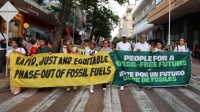
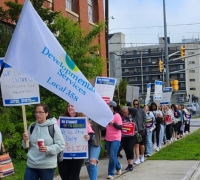
As a result, a mass demonstration against the G20 can often be greater than the sum of its parts. We saw this during the “People First!” action on June 26, which brought together the labour movement, environmental campaigners, maternal health advocates, anti-war activists and so on.

Although mobilizations like these are often “one-off” events, they still help organize different struggles into one movement, and allow people just beginning to radicalize to get active. Whether seen on TV or witnessed by passers-by, these actions demonstrate that there is widespread opposition to the effects of neoliberalism. This can often develop into opposition to the system itself.

Mass action On its own, a mass demonstration may hinder the implementation of certain policies, but it can’t stop capitalism in its tracks. What matters is their ability to galvanize and mobilize opposition to the system.

For socialists, they provide a crucial opportunity to expand the movement, maintain momentum and break down barriers between struggles that often remain isolated. In short, they help forge new bonds of solidarity.

That’s why we mobilized against the G20—not because we think capitalism will grind to a halt if the summit is disrupted or shut down. Summits are attempts to overcome divisions between ruling classes in various nation states. What they can’t achieve through global agreements, they try through regional agreements. What they can’t achieve regionally, they try bi-laterally.

Basically, summits are where the world’s largest economies compete with each other for a better deal for themselves. This doesn’t mean we can’t wrest reforms from world leaders. Without protest, it would be even harder to win reforms or prevent more damaging policies from being implemented. In this context, the main objective of mobilizing for the G20 should be to broaden the left and build the movements.

Goals, strategy & tactics

What tactics we use should flow from this objective. It’s not the summit itself that matters, but the ability to draw large numbers into action. To determine a tactic before determining the larger strategic objective elevates tactics into principles. It also robs the movement of any tactical flexibility.

Tactics are the tools we use to bring about a result. Good sense suggests that we first discuss the desired outcome or goals, then the strategy to get there, and finally what tactics would best deliver the outcome. So what about “diversity of tactics” and the Black Bloc?

Their actions in Toronto mirror tactics used elsewhere. Regardless of their intent, the tactics and politics of the Black Bloc are inherently elitist and counter-productive. In fact, they mirror the critique of reformism shared by many on the left. The NDP says, vote for us, and we’ll do it for you (in Parliament).

The Black Bloc says, in essence, the same thing: we’ll make the revolution for you. At best, the tactics of the Black Bloc are based on the mistaken idea that high-profile attacks on property and the police will create a spark to encourage others to resist capitalism.

At worst, they are based on a rampant individualistic sense of rage, and the entitlement to express it regardless of the consequences for others.

The Black Bloc ends up imposing on others its anti-authoritarian politics during its actions. The tactics and politics of the Black Bloc leave its members prone to being manipulated by the state. During almost every summit protest, police and others (in Genoa, it was Italian fascists) infiltrate or form their own blocs to engage in provocations.

The politics of secrecy, unannounced plans and attempts at a militaristic approach to demonstrations make such infiltrations easier.

Police repression

These tactics also open the door to the justification of further police repression. Some argue that the state doesn’t need justification for repression. But if the state didn’t need justification for repression, it would simply smash strikes and jail trade unionists with impunity.

Capitalism isn’t a democratic system, but it still relies on the façade of political rights to maintain the illusion that liberal democracy is the freest system. The reality is that most people oppose police brutality and believe we are living in a democracy.

Therefore, when the police go on a rampage, they need an excuse to do it. If they didn’t need an excuse, we wouldn’t have a “war on drugs”—it would be called what it is: a war on the poor.

What’s radical?

Others argue that we have to support these tactics because they are “radical”. But what does radical really mean?

Some say that Black Bloc tactics hurt capitalism because of the economic disruption they cause. The reality is that the Tamil community created much more economic disruption with its non-violent occupation of the Gardiner Expressway in Toronto on May 2009. Likewise, Sudbury workers who valiantly fought Vale Inco did much more to disrupt the economy than a thousand Black Bloc actions ever could.

For socialists, radical means building workers’ confidence and raising their consciousness to fight back—not just at work, but in solidarity with others. Radical means developing a sense of mass power, organizing based on a strategy to move others into struggle and winning them to fight back collectively—beyond the individualization of society.

Radical means going to the roots of the system—not trashing its symbols. In this light, it is much more radical to organize a union at a Starbucks, or to build the confidence of your co-workers to fight homophobia, or to defend women’s rights, than it is to smash a window.

Black Bloc tactics might inspire passive support from those who already don’t like the police. But the majority of people don’t agree with these actions, nor have the confidence to engage in them. Instead of building confidence, these actions generally produce confusion and allow the state to justify its repression and billion-dollar “security” expenditures.

Outside an already radicalized minority of people, these tactics don’t build the confidence of large numbers of people to fight capitalism. At best, they leave the impression that the fight against capitalism can only be carried out by a heroic minority. At worst, they leave people worrying about going to demonstrations. If a tactic doesn’t build workers’ confidence to resist, it doesn’t really challenge capitalism in any meaningful way.

That said, socialists must always defend the right of workers and oppressed communities to self-defence. The response from the left to the riots in Toronto after the Rodney King verdict is a good example: many defended the outrage at both the racism of the “justice system” and the police violence against King. It was a justifiable rage against a system of racism, but it wasn’t necessarily an effective strategy to defeat it.

Capitalism won’t fall because of a few broken windows. To get rid of capitalism, we need to be prepared to work with anyone who is only just beginning to radicalize. This means relating to people who do not necessarily support radical ideas at the moment, but who might be won to those ideas in future struggles. On these terms, it is clear that the Black Bloc has alienated far more people than it has won.

Civil liberties

The same debate about tactics is now underway in response to police repression during the G20, with some claiming the demand for civil liberties is not radical enough, and similar critiques of the “People First!” demonstration.

Again, the point is that the demand to defend civil liberties has brought thousands of new people into activity, and exposed the scale of police and state repression, just as the “People First!” demonstration mobilized thousands of working people and their allies.

The role of socialists and anyone who wants to get rid of capitalism is not to denounce these actions, but to help build them—working alongside workers who may believe that capitalism can be reformed, and arguing for the need to move struggles beyond just the demonstration.

There are no short-cuts to getting rid of capitalism. Building workers’ confidence to resist Harper’s coming austerity measures will take organization, patience and debate. The key task for socialists is to take advantage of the growing anger at police repression, at the billions wasted on fighter jets and at Harper’s “law-and-order” agenda.

In short: to help workers radicalize and become involved in their own struggles. A revolutionary movement must demonstrate that it’s not only necessary, but possible, to win large numbers of people to challenge capitalism. But to do so means having the theoretical clarity to make the best tactical choices—ones that build the confidence of others to resist.

Socialist Worker

Socialist Worker

Fighting fund

Socialist Worker is at the heart of the resistance. We have been centrally involved in supporting city workers on strike, the anti-war movement and building a campaign to stop climate change. Help us expand our work by donating to our Socialist Worker fighting fund.