
|
Reports
You are here
Is this Modi’s first setback?
April 21, 2026
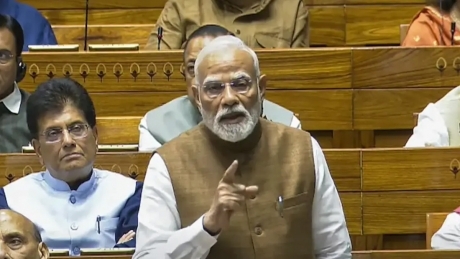
Narendra Modi, India’s far-right prime minister, has tasted his first defeat in 12 years inside the Indian parliament. His electoral reform bill sought to redraw the electoral map of the country under the guise of women’s representation in parliament. But this bill, which required a two-thirds majority in the House of Commons, has been squarely shot-down by the opposition. This is the first time in 12 years of Modi’s rule, that his BJP government has failed in their attempt to amend the constitution of India – a consequence of losing their parliamentary majorityin the most recent elections.
While Modi’s supporters say that this bill aimed to raise women’s representation in parliament to 33 percent, it included a hidden agenda. The purported ‘raising of representation’ was linked to another proposal for a new delimitation exercise, based on the 2011 census, in order to redraw the electoral landscape by increasing the total number of constituencies - from 543 to 850. This would be based on population density, leading to an exponentially higher number of new constituencies in the Northern Indian states, where the BJP has a strong electoral base and where far right Hindutva politics remains deeply rooted. Conversely, the South Indian states - Andhra Pradesh, Karnataka, Telangana, Tamil Nadu and Kerala, would not see a proportionate increase in the number of constituencies. Modi’s electoral performance has been consistently the weakest in these states, and the various divisive agendas of his platform – including imposition of Hindi language, have found strong resistance here. In effect, critics argue that this Bill constitutes a gerrymandering plan within the Indian political landscape.
The BJP government claims that the changes are more democratic, but they are in fact a smokescreen for increasing the power of the already powerful Hindi-speaking belt in the northern states within the federal system, further entrenching their power.
The Southern states have not only met the various population control criteria set by the Federal government over the years, but they have also scored higher on human development parameters. The latter has been the result of left-populist movements, such as the communist movement in Kerala and the Dravidian movement in Tamil Nadu, that have put healthcare and education at the center of their platforms. These states argue that the delimitation bill would punish them for their successes. Worried about a loss of self-determination, they have banded together to reclaim some power within the federal system of India, which has been increasingly eroded by the BJP over the last 12 years. In a strong act of political theater, the Chief Minister of Tamil Nadu, MK Stalin, burnt a copy of the bill outside the parliament. When the opposition out-voted Modi, he declared that ‘Tamil Nadu has defeated Delhi today’.
This victory, which further chips away at the once-insurmountable confidence of the BJP, could also lead to the rise of a South Indian consciousness centered on the Dravidian identity – once a historic fulcrum around which progressive, anti-Caste, working class politics were articulated in the south. It is also a matter of relief that this minor setback faced by Modi closely follows the historic electoral loss faced by his counterpart Viktor Orban in Hungary. Perhaps, in these dark times, we can let the ‘optimism of the will’ suggest to us that our age of despots might be coming to an end.
Section:
Topics:


Featured Event

Events
-
October 18, 2026TkarantoOrganized by:International Socialists
-
October 18, 2026TorontoOrganized by:International Socialists
Recent Videos


Visit our YouTube Channel for more videos:

Visit our UStream Channel for live videos: