
|
Reports
You are here
Climate change helping spread Lyme disease
August 18, 2026
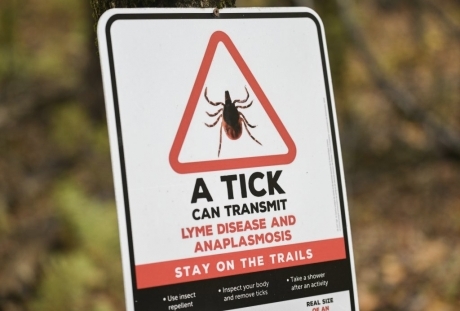
Canada is seeing a growing public health risk caused by tiny mites - ticks. As climate change warms Turtle Island, ticks and the diseases they carry are spreading to new areas. Provisional figures for 2025 show 7,100 people in Canada probably got Lyme Disease - a potentially deadly infection. Yet the government response has been to cut funds to combat this health threat.
Lyme Disease can be extremely serious in humans, particularly if it isn’t treated quickly or the bitten person has a vulnerable immune system, but in anyone it could damage the heart muscle and brain. It can easily be misdiagnosed if the patient hasn’t seen the tick that bit them - famously US singer, Kris Kristofferson was treated for Alzheimer's disease for years before it was found to be Lyme Disease.
The highest levels of recorded cases now are in Nova Scotia, Ontario, Quebec, and southern Manitoba where for humans the main carriers of the bacteria are Blacklegged, or Deer ticks whose numbers have boomed this year. In Nova Scotia in June this year, I watched ticks stroll across cut grass and climb our clothing in search of exposed skin. When they smelt skin — they have poor eyesight — they moved with amazing speed in the hope of their next meal.
Lyme Disease-causing bacteria have been in North America for 60,000 years and Indigenous people developed ways of life that managed the risk. These included wearing long-sleeved and long-legged clothing, making tick-deterrant creams, examining family members thoroughly and managed, strategic grass burning.
But we also know that across the north of Turtle Island, Indigenous people had fewer ticks to avoid. Yale Medical School only described and named Lyme Disease in the 1970s and only a few isolated instances of it were found in Canada in the 1980s. Ontario was then identified as its centre because of its deer population.
But since then climate change has made northern winters shorter with warmer springs and summers allowing ticks and the bacteria they carry to expand their range northwards by as much as 55 km a year.
Climate change is exacerbating many threats to human and non-human life across North America, besides tick-borne diseases and devastating wildfires. For instance, Perkinsus marinus, is a marine parasite that causes Dermo disease in molluscs such as oysters. Climate change is one of the factors that has allowed the parasite to move into New Brunswick, Newfoundland and Labrador, Nova Scotia, Prince Edward Island, Quebec and both sides of the Atlantic. It won’t harm human health but there’s no cure and it can destroy Indigenous and Non-Indigenous commercial fishers’ livelihoods, food security and Cultural practices.
The funding to improve Lyme disease research, diagnosis, treatment and patient care was only $5 million between 2017 and 2026 but it created the Canadian Lyme Disease Research Network in 2018. This network grew to become TickNet Canada which focused on all diseases carried by ticks. This relatively small amount of money has been cut, among thousands of other cuts announced last year: the federal government has plans to cut at least $60 billion over the next five years. Meanwhile the government can always find many more $billions for the killing-machine of the Ministry of National Defence expansion of Canada’s Navy.
The cuts to services ordinary people need include tens of thousands of public sector jobs, rural libraries and fishing infrastructure. The cuts will fall heaviest on Indigenous and Non-Indigenous working class people and we shouldn’t let the government get away with it.
Section:
Topics:


Featured Event

Events
-
October 18, 2026TkarantoOrganized by:International Socialists
-
October 18, 2026TorontoOrganized by:International Socialists
Recent Videos


Visit our YouTube Channel for more videos:

Visit our UStream Channel for live videos: