|
Reports
You are here
BC NDP paved the way for Conservative election win
October 25, 2026
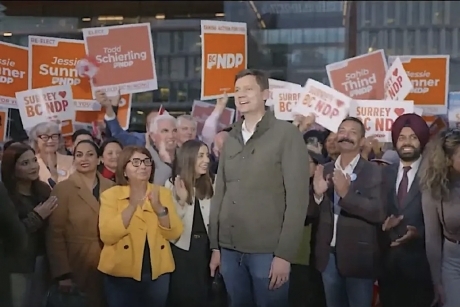
At the end of September, BC NDP Premier David Eby called a snap election two years into his government's four-year mandate. The opposition Conservative party had ripped itself apart over the previous two years. They ousted the leader that took them within three seats of forming government. Then, through a combination of defections and expulsions, his replacement managed to reduce their seat count by 19 MLAs, who between them created three new political parties.
It is likely that the premier was gambling that the chaos on the right would continue and allow the NDP to increase their slim majority. Instead the weekend before the Premier called the election the Conservative leader quit and was replaced within hours by Lorne Doerkson and most of the wayward MLAs quickly returned to the party.
Polls immediately moved, showing increasing support for the Conservatives and decreasing support for the NDP. On election day the preliminary results were 64 seats for the Conservatives, 27 seats for the NDP (a decline of 20 seats) and the Greens maintaining their two seats.
The vote tallies show a remarkable picture. Voter turnout declined from nearly 60% in 2024 to less than 50% this time. If the outstanding votes (mostly mail-in ballots) decline the same way and if the votes split more or less the same way, the victorious Conservatives will have won less votes in 2024 to gain 64 seats than the NDP did in 2020 to win 47. It is likely that the Conservatives will win with less votes this time than they got when they lost in 2024.
The big decline is in the turn out for the NDP, depending how the outstanding votes were cast, it is likely the NDP will get 200,000 less votes than last time. The Greens might be ahead by 40,000 votes, so the election results are mostly due to NDP voters staying home. There has been no movement by voters to the right. Even when you include the 60,000 votes for the two parties that split from the conservatives, their combined total is still about the same as the votes the Conservatives got last time.
The BC NDP’s allegiance to neoliberalism has been well documented on Socialist.ca.
- BC election unlikely to end well
- Premier Eby, hands off the Declaration on the Rights of Indigenous Peoples Act!
- Support the Quw’utsun Nation land claims victory
- NDP failures provide opening for BC Conservatives
The NDP attacks on Indigenous rights, their commitment to involuntary treatment for mental health and addictions, the abandonment of drug decriminalization and the opposition to providing a safer supply as well as their dedication to fracked gas and abandoning any chance of meeting their own climate goals did not move Tory voters to them. It did move provincial politics to the right and led to 200,000 abandoning the NDP.
The Tories are still the same band of BC Liberals and convoy conservatives that tore themselves apart a few months ago. Unlike after the last election, they now have all the rewards that go along with being in government and in cabinet to hold them together. This time it’s up to the rest of us to provide the pressure to pull them apart and bring down the government.
The Tories have promised tax cuts and reduced spending, this means they will try to cut public sector jobs and funding to education and healthcare. They have promised to repeal the Sexual Orientation and Gender Identity programs in schools. They have a “tough on crime” approach to mental health and addictions. They will repeal the Declaration on the Rights of Indigenous Peoples Act. There will be resistance especially from Indigenous Nations. We must all build the solidarity needed for all of these fights.
How do we resist?
In May, 1983 the BC Social Credit government was re-elected and proceeded to implement a wide ranging right wing agenda including slashing the public sector, removing rent controls, and dismantling the human rights act. By November, a mass movement — Operation Solidarity — saw more than 85,000 workers on strike as the first wave of a planned general strike that would have directly involved one in three workers in the province. That amazing movement was sold out by the trade union leadership but showed the power of mass action.
In 1995 in Ontario the Tories defeated the one term NDP government. They also proceeded with massive cuts to education and healthcare. Welfare rates were cut, and the minimum wage was frozen. Protests began quickly after the election and built into city-wide general strikes, culminating in the Toronto general strike which shut down the city. Instead of building to a province wide strike the Ontario Federation Of Labour moved to smaller city strikes and then wound up the movement.
In 2001 the BC Liberals won 77 of 79 seats in the legislature and proceeded to attack the public sector, close hospitals and slash public spending. Protests quickly followed and again they drew organized labour into action. In this case massive one day demonstrations in several cities were wound down by the BC Federation of Labour before they reached the level of all out strikes.
In all of these cases pushing the movement further and placing concrete demands on the government could have won.
The week before the provincial election municipalities held elections across BC. Results were far from uniform across the province but the Vancouver results show what the possibilities are. The incumbent right wing mayor and council lost all but one seat on council. The bold anti-capitalist vision of COPE won council seats for all of their candidates and the Green candidate they backed up for mayor won as well. Socialist Sean Orr won the most votes on council with more that 83,000 - nearly 5,000 more than the next most popular councilor. This shows that the left can inspire people and win elections.
Today the BC Tories are vulnerable. Their seat count provides an illusion of a broad mandate, but the vote numbers show that there is no shift to the right. To implement their plans they need to attack segments of society that can and will fight back. If we can unite these fights, we can push back the Tory agenda. The uprisings in France and India show what the possibilities are.
Join us on November 29 for a discussion of the 1983 Operation Solidarity strike movement as part of Resistance and rebellion: A people’s history of the Canadian state study series
Section:


Featured Event

Events
-
October 28, 2026VancouverOrganized by:snəw̓eyəɬ leləm̓ Langara International Socialists
-
November 1, 2026TkarantoOrganized by:International Socialists
-
November 1, 2026TorontoOrganized by:International Socialists
Recent Videos


Visit our YouTube Channel for more videos:

Visit our UStream Channel for live videos: